
What our cells do:
A different way to look at carbohydrates.
Have you had your “53 peaches” today?*
Did you know there are over 200 different carbohydrates — and some play a much more important role in the body that most people realize?
What most people don’t hear:
Most diets today focus on reducing carbs and sugars.
But within our fruits and vegetables there are different types of carbohydrates and some of them are essential to how our body functions.
In the science world this area of study is called glycobiology.
Why this matters:
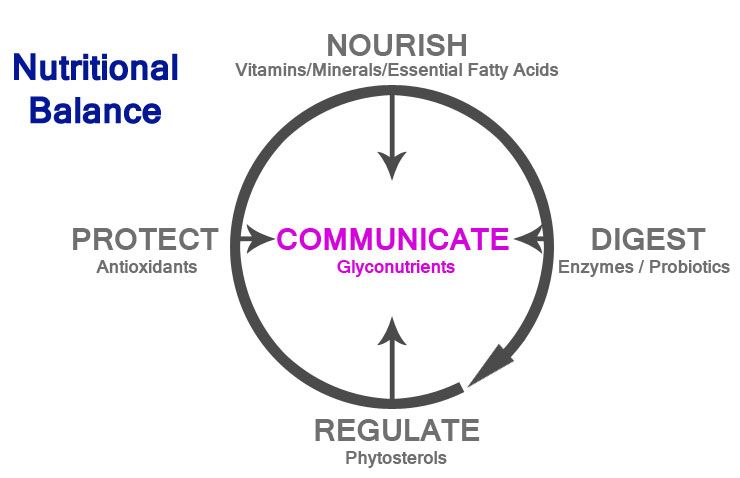
Certain carbohydrates (often called glycans) are involved in how the cells communicate with each other. Just as we have the alphabet to communcate, our cells use glycans.
This communication is important because it helps the body:
● recognize what belongs and what doesn’t
● be able to support the normal processes within each cell
● is foundational in all the body’s activities and function

A key discovery (background):
Scientific research into the aloe vera plant led to the discovery of the specific healing component within the plant — a carbohydrate called mannose — and how to stabilize it for use.
This research eventually led to the development of a stand-alone glycan product which became our flagship product. Glycans are now included throughout our entire product line.
What this means in everyday terms:
Our products are designed to provide plant-based nutrients, including key glycans, that may not always be present in sufficient amounts in modern diets.
They are:
● plant-based
● backed by ongoing research
● designed for daily use
● focused on supporting overall wellness
A simple way to think about it:
Supplements are not about quick fixes.
They are about giving the body the nutrients it needs to support itself over time.
Ongoing research:
This area of science continues to grow, with increasing world-wide interest in how carbohydrates influence health and the biiological processes.
Learn More:
If you’d like to explore this topic further
→ Watch a short overview
→ Explore related product
Next Step
If this is something you’re curious about, or if you simply have questions, we’d be happy to connect.
Note:
*In the 1950’s just two peaches could provide the daily adult requirement of Vitamin A.
Current research suggests you would now need to eat 53 peaches in a day to obtain the same amount of Vitamin A.